A clogged AC drain line is one of the most common and most overlooked air conditioning problems. If left untreated, it can cause water leaks, mold growth, system shutdowns, and costly repairs.
In this guide, you’ll learn how to unclog an AC drain line safely, recognize early warning signs, understand why drain lines clog, and prevent future blockages all using HVAC-approved best practices.
What Is an AC Drain Line?
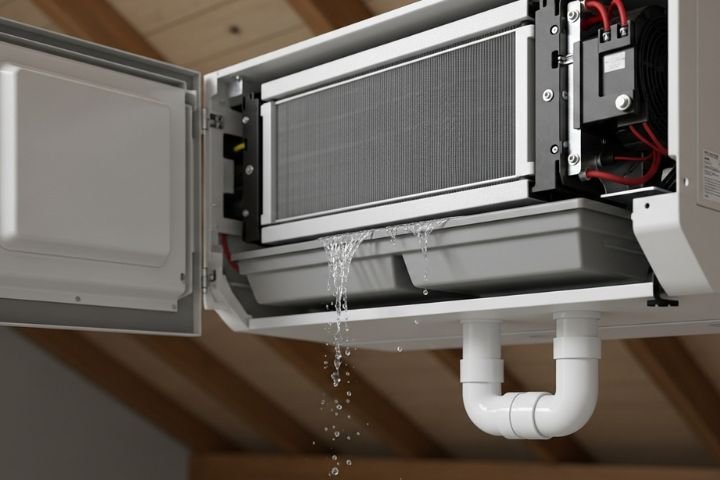
An AC condensate drain line removes moisture produced during the cooling process. As warm air passes over the evaporator coil, condensation forms and flows through the drain pan into the drain line, safely exiting your home.
AC Drain Line Diagram (Simplified Flow)
- Evaporator coil
- Drain pan
- Condensate drain line
- Outdoor or plumbing exit
When debris blocks this path, water backs up, leading to leaks or system failure.
AC Drain Line Clogged Symptoms (Early Warning Signs)
Recognizing AC drain line clogged symptoms early can save you money and damage.
Common signs include:
- Water pooling near the indoor AC unit
- Musty or moldy odors from vents
- AC system shutting off unexpectedly
- Reduced cooling performance
- Visible algae or slime in the drain line
- Overflowing drain pan
If you notice these signs, your AC condensate drain line is likely clogged and needs immediate attention.
What Causes a Clogged AC Drain Line?
Understanding why AC drain lines plug up helps prevent future issues.
Most common causes:
- Algae and mold growth
- Dust, dirt, and insulation particles
- Rust or corrosion in older systems
- Poor installation slope
- Infrequent maintenance
Warm, humid environments make drain lines especially vulnerable to biological growth.
How To Unclog AC Drain Line (Step-by-Step)
Step 1: Turn Off the AC Power
Always shut off power at the thermostat and breaker before working on your unit.
Step 2: Locate the AC Drain Line
Typically found:
- Near the indoor air handler
- In the attic, basement, or utility closet
- A white PVC pipe exiting the unit
Step 3: Inspect the Drain Pan
If water is standing in the pan, it confirms a drain line clogged AC unit problem.
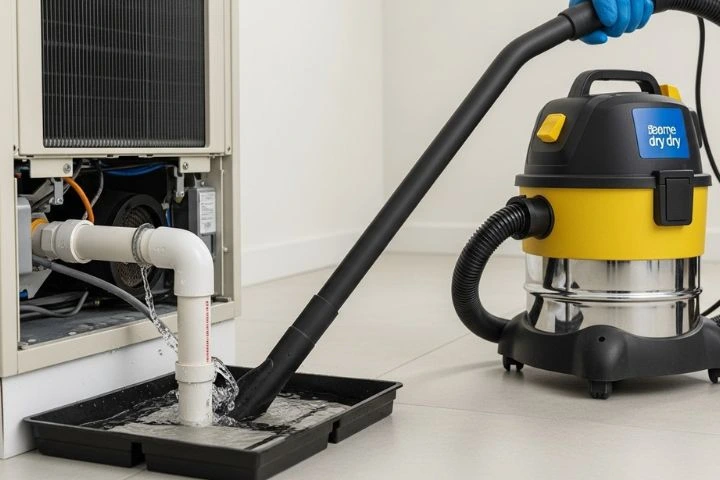
Step 4: Use a Wet/Dry Vacuum (Best Method)
- Attach the vacuum to the outdoor drain line opening
- Seal the connection with duct tape
- Run the vacuum for 2–3 minutes
This method removes algae, sludge, and debris effectively.
Step 5: Flush With Vinegar or Hot Water
Pour 1 cup of distilled vinegar or warm water into the access point to break down residue.
Step 6: Clear Stubborn Clogs (Optional)
Use:
- A drain line brush
- Flexible plastic tubing
- Compressed air (low pressure only)
Step 7: Restore Power and Test
Turn the AC back on and confirm water flows freely from the drain line.
How To Unclog a Window AC Drain Line
Window units clog differently due to compact design.
Steps:
- Unplug the unit
- Remove the front panel
- Clean the drain hole at the base
- Flush gently with warm water
This resolves most window AC drain line clogged issues.
How Often Should You Clean an AC Drain Line?
To prevent clogged drain line AC problems:
- Every 3–6 months in humid climates
- Annually during HVAC maintenance
- Monthly during peak summer usage
Adding vinegar regularly helps stop algae growth.
Can a Clogged AC Drain Line Damage Your System?
Yes. Ignoring a clogged AC condensation drain line can lead to:
- Water damage to ceilings and walls
- Mold and mildew growth
- Electrical component failure
- Complete system shutdown
Some systems include a float switch that shuts the unit off to prevent flooding.
When To Call an HVAC Professional
Contact a technician if:
- The clog returns frequently
- You see rust or cracked drain lines
- Water damage is already present
- The system shuts down repeatedly
Persistent clogs may indicate deeper installation or airflow issues.
AC Drain Line Maintenance Tips (Prevention)
- Install a drain line cleanout tee
- Pour vinegar monthly
- Replace air filters regularly
- Schedule annual HVAC inspections
- Keep drain exits clear outdoors
Preventative care is far cheaper than repairs.
Final Thoughts
Knowing how to unclog an AC drain line protects your system, improves indoor air quality, and prevents costly water damage. With routine maintenance and quick action at the first sign of trouble, you can keep your AC running efficiently all year long.