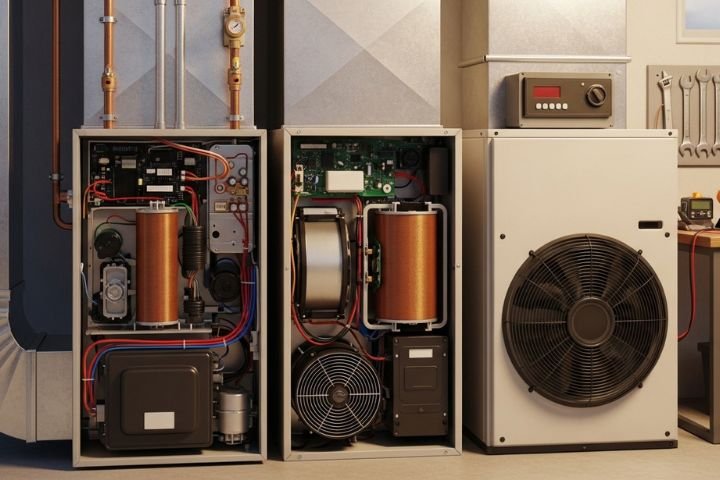
If you have ever noticed water dripping near your air conditioner or moisture around your unit, chances are the AC drain pan is involved. Homeowners frequently ask, where is the drain pan on an AC unit and where is my air conditioner drain pan located because it is not always easy to spot.
This guide explains exactly where the air conditioner drain pan is, what it looks like, how it works, and how to clean or empty it properly. Whether you have a central AC, air handler, furnace-mounted system, mini split, or window unit, this article covers every scenario.
What Is an Air Conditioner Drain Pan?
The air conditioner drain pan, also called a drip pan, condensate pan, or AC water tray, is designed to collect condensation produced during the cooling process. When warm air passes over the evaporator coil, moisture forms and drips into the pan, then exits through the condensate drain line.
Without a properly working drain pan, water can overflow and cause:
- Ceiling or wall water damage
- Mold and mildew growth
- Rust inside the HVAC unit
- AC shutdown from a float switch
Where Is the Drain Pan on an AC Unit Located?
The AC drain pan location depends on the type of air conditioning system you have.
1. Central Air Conditioner with Air Handler
- The primary drain pan is located directly under the evaporator coil
- It is inside the air handler cabinet
- Water drains from this pan into the condensate drain pipe
2. Furnace and AC Combination Systems
- The drain pan sits above the furnace, beneath the A-coil
- Usually not visible unless you remove the front panel
3. Attic AC Units
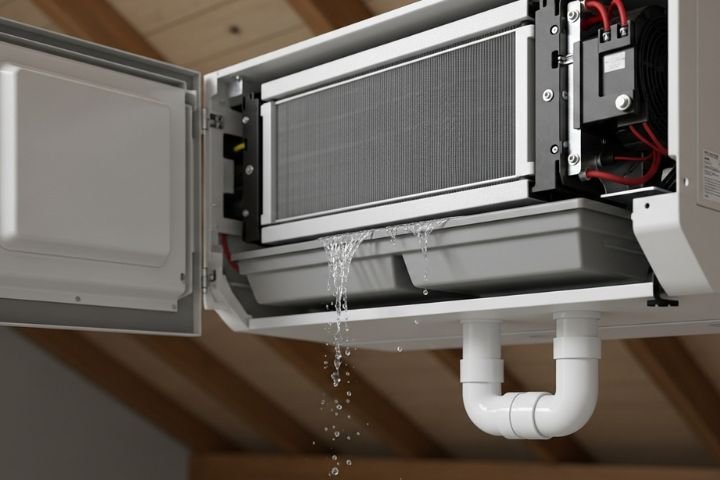
- A secondary drain pan is installed under the unit
- This pan is visible in the attic and acts as a backup if the main pan clogs
4. Vertical vs Horizontal Units
- Vertical systems have the drain pan beneath the coil
- Horizontal systems have the drain pan on the side of the coil housing
Where Is My AC Drain Pan If I Can’t See It?
Many homeowners search where is my AC drain pan because it is hidden inside the unit. If you cannot see a pan:
- Remove the access panel on the indoor air handler
- Look beneath the evaporator coil
- Check for a PVC drain pipe exiting the unit
If your AC is in the attic, garage, or closet, the drain pan may be under the unit rather than inside it.
What Does an AC Drain Pan Look Like?
An AC drain pan typically:
- Is rectangular or square
- Made of plastic or metal drip pan material
- Has a small drain outlet on one side
- Sits directly below the evaporator coil
Older systems often use metal drain pans, which can rust over time. Newer systems usually have plastic condensate pans.
Primary vs Secondary Drain Pan Explained
Primary Drain Pan
- Inside the air handler
- Collects daily condensation
- Drains water through the AC drain line
Secondary Drain Pan
- Installed beneath attic or ceiling units
- Acts as an emergency backup
- Often paired with a float switch
If water is visible in the secondary pan, the primary drain line is likely clogged.
How Much Water Should Be in an AC Drip Pan?
Under normal conditions:
- The primary drain pan should not hold standing water
- Water should drain immediately through the condensate line
Standing water indicates:
- A clogged drain line
- Improper slope
- Cracked or rusted drain pan
How to Clean an AC Drain Pan Safely
Step-by-Step Cleaning Process
- Turn off the AC system
- Remove the access panel
- Locate the drain pan under the evaporator coil
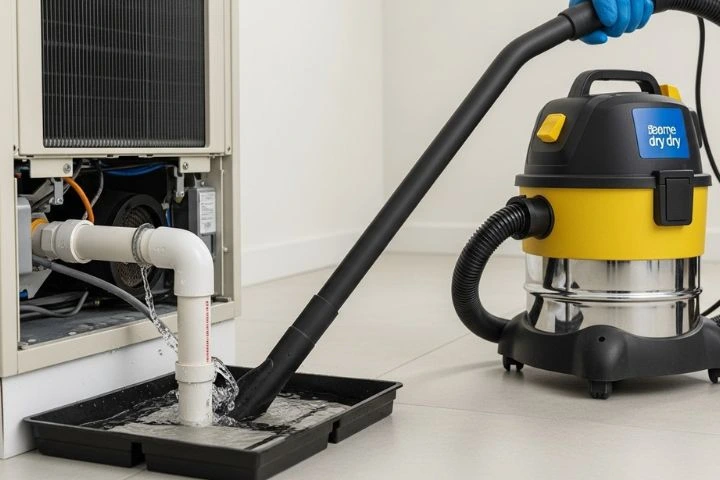
- Remove standing water with a wet vacuum
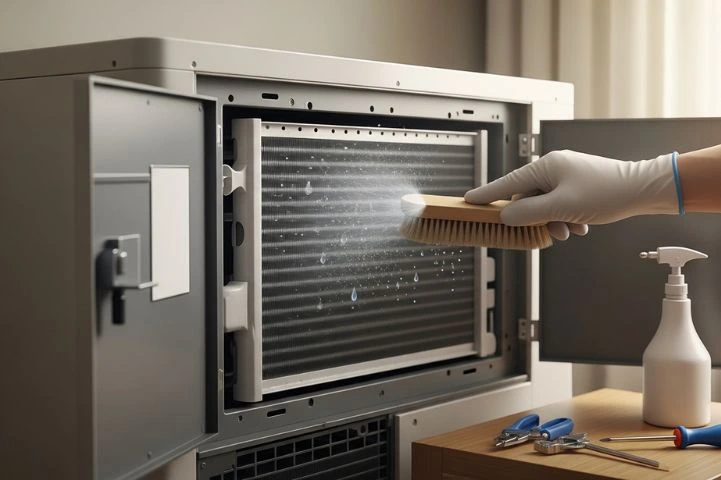
- Scrub with warm water and mild detergent
- Rinse and dry completely
- Flush the condensate drain line
Avoid bleach directly in the pan unless recommended by the manufacturer.
How to Empty the Drain Pan on an Air Conditioner
If water is collecting:
- Use a wet/dry vacuum
- Empty into a bucket or floor drain
- Inspect the condensate drain line for blockages
- Check the AC drain pipe location outside the home
Never leave standing water in the drain pan.
Common AC Drain Pan Problems
Cracked or Rusted Pan
- Causes leaks inside the unit
- Common in older metal pans
Algae and Slime Buildup
- Blocks drainage
- Leads to overflow
Improper Drain Line Slope
- Water stays in pan instead of draining
Faulty Float Switch
- AC may shut off even with minimal water
AC Drain Pan Location by System Type
| AC Type | Drain Pan Location |
| Central AC | Inside air handler |
| Attic unit | Under unit + internal pan |
| Mini split | Inside indoor head |
| Window AC | Bottom internal tray |
| Portable AC | Internal drip pan |
When to Call an HVAC Professional
You should call a technician if:
- The drain pan is cracked
- Water damage is visible
- The float switch keeps shutting off the AC
- You cannot access the drain pan safely
- The condensate drain line remains clogged
Final Thoughts
Understanding where the drain pan on an AC unit is located helps prevent leaks, mold growth, and costly repairs. While the air conditioner drain pan is often hidden, regular inspection and cleaning keep your system running efficiently.
If you ever see water in places it should not be, the drain pan and condensate drain line should be the first thin.